
ফুটবল
How Columbus Turned a Late Chance into an Inter Miami Defeat
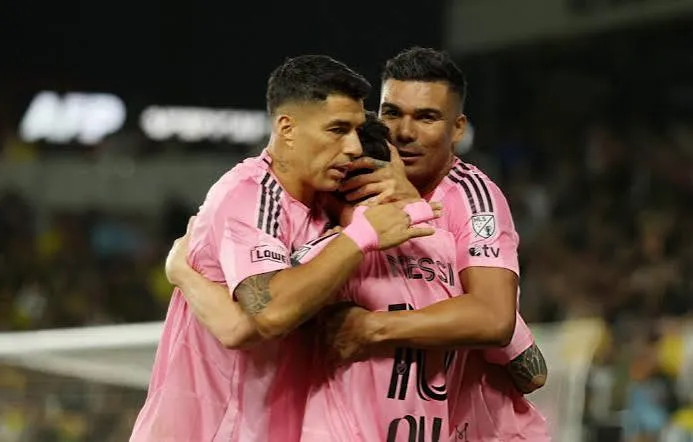
The Inter Miami defeat at Columbus ended 2–1 on 27 September 2026, despite Lionel Messi scoring an equaliser. Santiago Morales was dismissed in stoppage time before Jamal Thiaré struck the late winner, turning a possible away point into a frustrating MLS loss for Miami.
The Inter Miami defeat is best understood through the sequence of events rather than a single headline about Messi. Miami recovered after conceding first, remained level deep into the match and then failed to protect that position during the final minutes.
Inter Miami defeat: the confirmed scoring sequence
The official MLS match feed records the match at ScottsMiracle-Gro Field and confirms a 2–1 Columbus victory. Its event log provides the clearest starting point for separating the goals from the disciplinary incident.
| Minute | Event | Score |
|---|---|---|
| 28 | Josef Martínez scores a penalty for Columbus | Columbus 1–0 Miami |
| 33 | Lionel Messi equalises | 1–1 |
| 90+6 | Santiago Morales receives a second yellow card | 1–1 |
| 90+8 | Jamal Thiaré scores for Columbus | Columbus 2–1 Miami |
The red card was not a goal, and the equaliser was not a winner. Keeping those events distinct avoids the misleading impression that Miami were leading when their numerical situation changed.
Messi’s equaliser before the Inter Miami defeat
Miami’s response to the opening goal came quickly. Messi brought the visitors level five minutes after the penalty, removing Columbus’s advantage and changing the immediate demands on both teams.
Analysis: an equaliser changes the score but does not settle control of the game. The defending shape, ability to keep possession and management of substitutions still matter. A team can have an effective finisher and remain vulnerable when the ball moves toward its own penalty area.
That distinction is also useful when reading our report on Haaland’s two goals against Denmark. Individual scoring contributions deserve attention, but the final team result remains the outcome of actions at both ends of the pitch.
The Inter Miami defeat should therefore not erase Messi’s contribution, nor should his goal be treated as proof that the rest of the performance was sufficient. Both statements can be true: he restored parity, and Miami still finished without a point.
Inter Miami defeat: what changed after the red card?
Morales’s dismissal reduced Miami to ten players very late in the contest. Columbus then scored before the match could finish level. That chronology matters, but it does not prove the dismissal was the only reason the winning chance developed.
Analysis: playing with ten creates immediate organisational decisions. Someone has to cover the space previously occupied by the dismissed player. The remaining players must understand who pressures the ball, who protects the central passing route and who stays available as an outlet.
Late in a match, those adjustments must happen quickly. A team that simply retreats toward its goalkeeper can allow repeated deliveries, while an uncoordinated press may open space behind the first challenge. Compactness and clear responsibilities are more useful than every player chasing the same ball.
Inter Miami’s official recap of the Columbus loss provides the club’s account. The tactical points here are interpretation of the late-game situation, not claims about instructions heard from the coaching staff.
The rebound that sealed the Inter Miami defeat
Thiaré’s winning finish followed a saved effort from Brais Méndez. The initial shot did not beat the goalkeeper, but the attack remained alive and Columbus converted the second opportunity. That is the decisive feature of the winning sequence described in Field Level Media’s match report.
Analysis: defending a shot continues after the first contact. Players must anticipate where a save, block or deflection might send the ball. An attacker who follows the attempt can gain an advantage over a defender who assumes the danger has ended.
It would be too simple to judge the goalkeeper from the existence of a rebound alone. Shot placement, pace, visibility and nearby pressure can affect where a save goes. The broader question is whether the defending team can contest the next ball before the opponent reaches it.
A draw and a defeat have different consequences
At 1–1, Miami were on course for one league point. The late goal left them with none and gave Columbus three instead. Relative to a draw, that is two additional points for the winning side and one fewer for the losing side.
Our Slovenia–Scotland draw analysis examines a different competition, but it illustrates why a level score and a loss should not be treated as interchangeable setbacks. The table consequences depend on the points actually collected.
No complete live MLS standings are reproduced here. Other matches can alter positions, and this Inter Miami defeat alone does not establish an exact playoff outcome. A result report should separate the confirmed score from projections about the rest of the season.
Lessons from the Inter Miami defeat
Analysis: three areas deserve attention after this match: avoiding preventable disciplinary exposure, reorganising immediately after a dismissal and reacting to second balls. Each concerns execution rather than a vague demand for greater desire.
Keeping an outlet forward can also help a team protect a point. If every clearance returns immediately, the defence faces another phase without relief. A controlled first pass after regaining possession can be more valuable than a hurried long ball with nobody positioned to receive it.
The final lesson from the Inter Miami defeat is about completing the defensive action. Being level near the end is a useful position, but it still requires concentration until the last attack has been resolved. Readers following other results can find the site’s latest football match reports in the article archive.
Frequently asked questions
What was the Columbus–Inter Miami score?
Columbus Crew won 2–1 on 27 September 2026 in the MLS regular season.
Did Lionel Messi score against Columbus?
Yes. Messi scored Miami’s equaliser in the 33rd minute after Columbus had taken the lead through a penalty.
Who was sent off in the Inter Miami defeat?
Santiago Morales was sent off after receiving a second yellow card in stoppage time.
Who scored the winning goal?
Jamal Thiaré scored in the 98th minute, converting after a saved attempt from Brais Méndez.
আরও পড়ুন
সম্পর্কিত গাইড
ওয়ানডেতে বাংলাদেশের সর্বোচ্চ ব্যক্তিগত রান: লিটনের ১৭৬ থেকে শীর্ষ ইনিংস
ওয়ানডেতে বাংলাদেশের হয়ে সর্বোচ্চ ব্যক্তিগত ইনিংস লিটন দাসের ১৭৬ রান, ২০২০ সালের ৬ মার্চ সিলেটে জিম্বাবুয়ের বিপক্ষে। দ্বিতীয় সৌম্য সরকারের ১৬৯ (নেলসন, ২০২৩), তৃতীয়…
সম্পূর্ণ গাইড পড়ুনInter Miami Next Match: Date and Bangladesh Time (October 2026)
Inter Miami's next match is away at the New York Red Bulls on Saturday, 24 October 2026, at 5:30 p.m. ET. In Bangladesh that…
সম্পূর্ণ গাইড পড়ুন
টেস্টে বাংলাদেশের সর্বোচ্চ ব্যক্তিগত রান: শীর্ষ ১৫ ইনিংস ও ডাবল সেঞ্চুরি
টেস্টে বাংলাদেশের সর্বোচ্চ ব্যক্তিগত রান মুশফিকুর রহিমের ২১৯*। সাকিব ২১৭, তামিম ২০৬; বাংলাদেশের ৫টি ডাবল সেঞ্চুরি ও শীর্ষ ১৫ ইনিংসের তালিকা।
সম্পূর্ণ গাইড পড়ুনএই গাইড কাজে লাগানোর সময় এখনই
বিকাশ, নগদ বা রকেট দিয়ে 9Wickets অ্যাকাউন্ট খুলুন, অথবা সাহায্য লাগলে সরাসরি সাপোর্টে কথা বলুন।